
Irrigation
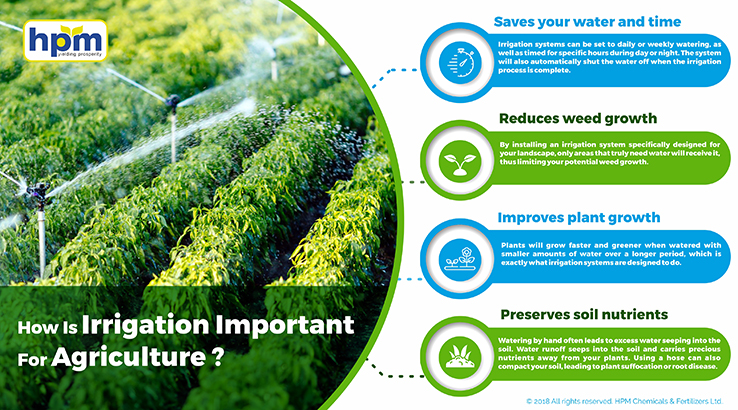
Irrigating crops is an agricultural practice that goes back thousands of years in human history. Despite significant advances in technology over time, the basic purpose of irrigation is much the same: to supplement water available through rainfall for the purpose of increasing crop yields and crop quality. As we know water management is becoming an increasing concern in agriculture, whether that’s dealing with too much or too little water.
Irrigation helps in stabilizing the output and yield levels. It also plays a protective role during drought years. Since both income and employment are positively and closely related to output, prevention of fall in output during drought is an important instrument for achieving stability of income and employment in the countryside. Irrigation has enabled many states to acquire ‘partial immunity’ from drought. Irrigation confers indirect benefits through increased agricultural production. The employment potential of irrigated lands, increased production, helps in developing allied activities, means of water transport, etc. are the improved income of a government from agriculture. Availability of regular water supply will increase the income of farmers imparting a sense of security and stability in agriculture


